Preparing for an HOA Fine Hearing
How to prepare an HOA fine-hearing file with the cited rule, notice, cure evidence, comparable properties, questions, and a one-page presentation.
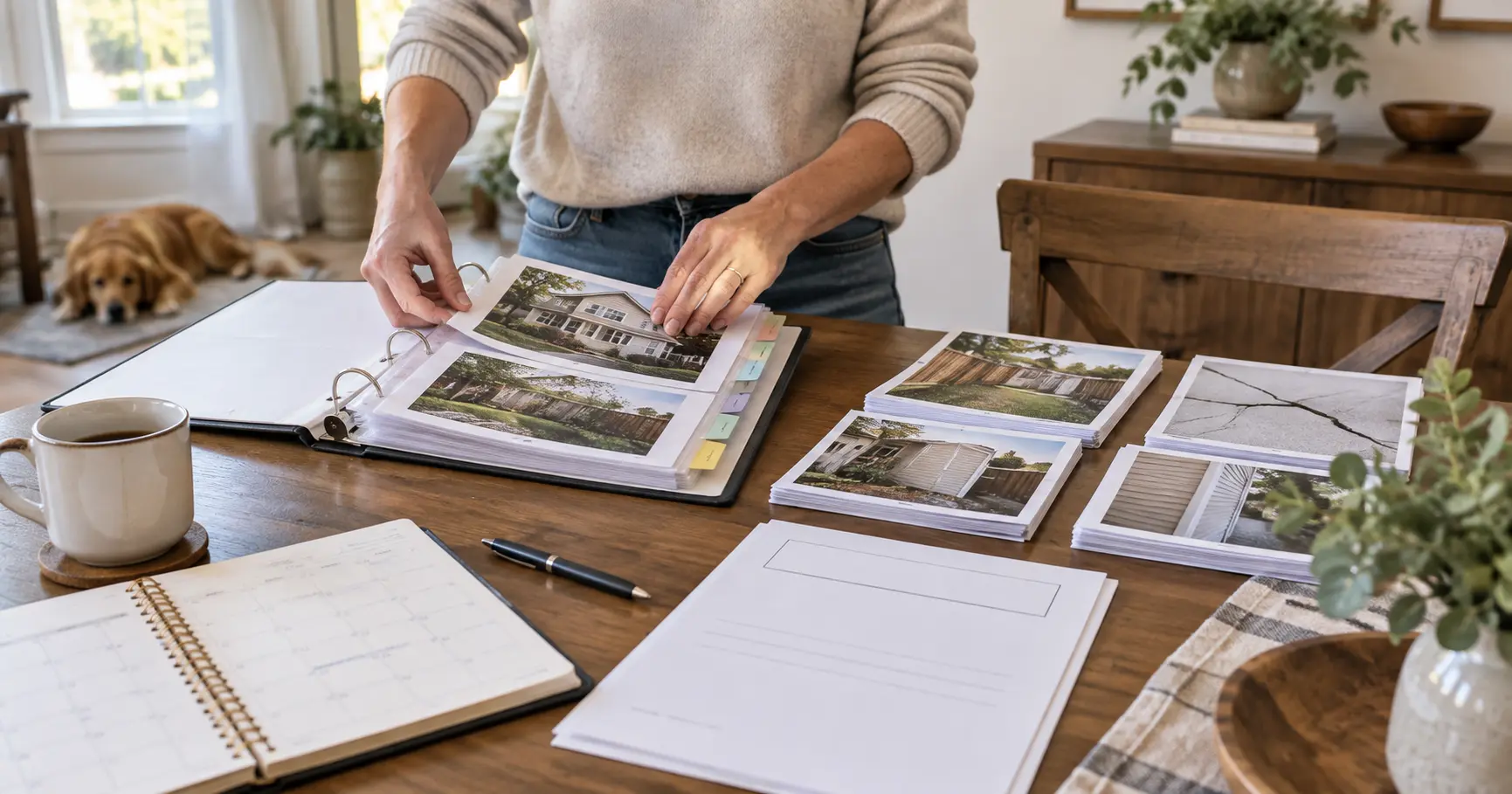
A fine hearing is not improved by bringing more paper. It is improved by bringing the right paper in a sequence the decision-maker can follow. Build a timeline, identify the rule, separate facts from legal arguments, and decide the exact result you want: withdrawal, reduction, cure recognition, more time, or correction of a mistaken property identification.
Build the hearing file in chronological order
- The rule or covenant the association says you violated, including the effective date.
- The first violation notice and evidence of delivery.
- Your response and any proof you supplied.
- Photos, work orders, receipts, permits, or messages showing the condition and cure.
- The hearing notice and any fine amount proposed.
- Comparable approval or enforcement records only if they are genuinely relevant and lawfully obtained.
Write a one-page timeline
Use dates and verbs. 'Aug 3 — manager photographed trash container. Aug 4 — notice issued citing Rule 8.1. Aug 5 — container moved behind screen; photo emailed. Aug 20 — fine hearing notice issued.' A timeline lets the committee see whether the alleged violation continued, whether you cured, and whether the association followed its own process. It also prevents you from spending the hearing on side disputes.
Florida illustrates how procedural detail can matter
Florida's 2026 homeowners' association statute, section 720.305, shows why procedure can be outcome-determinative. For the fining process covered by that subsection, the board must first give at least 14 days' written notice of the right to a hearing; the hearing must be held within 90 days after the notice is issued; the committee's written findings are due within 7 days after the hearing; and, when a fine is approved and the violation remains uncured, the payment date must be at least 30 days after delivery of the written findings. The statute also limits the committee to confirming or rejecting the fine or suspension levied by the board. Those are Florida 2026 rules, not a national hearing calendar.
Prepare the evidence around the disputed element
| Association claim | Evidence that speaks directly to it |
|---|---|
| Condition existed on date X | Dated photo, work order, security or delivery record |
| You failed to cure | After-photo, contractor invoice, manager acknowledgement |
| Rule applies to your property | Plat, parking map, unit boundary, rule definition |
| Fine amount is authorized | Fine schedule, governing document, statute |
| You were treated differently | Comparable records under same rule and period, not just random photos |
If you argue selective enforcement, narrow the comparison
A practical selective-enforcement showing usually asks whether the same rule was applied differently to materially similar situations, whether there was a legitimate distinction, and whether the difference mattered to the owner. Those are evidence questions, not a universal four-part legal test. State case law can define the defense differently. Use specific comparable properties and dates, and ask local counsel if the defense is central to a serious case.
Plan the presentation in four beats
- Identify the notice and the exact result you are asking the committee to reach.
- Give the short chronology: alleged condition, notice, response, cure or disputed fact, and hearing notice.
- Point to the two or three exhibits that prove the disputed facts instead of narrating the whole file.
- Restate the requested outcome and ask when the written result will be sent.
Ask procedural questions without turning them into accusations
If something appears missing, ask: 'What document shows the board levied the proposed fine?' 'Which version of Rule 5.4 applies to this notice date?' 'Was the committee provided the cure photo sent on August 5?' These questions invite the record to be completed. If the hearing becomes contentious, keep notes and avoid signing a settlement or waiver you do not understand without time to review it.
For a deeper state-by-state view of fines, hearings, liens, and escalation, see the fine and hearing process by state.
Leave with a next-step date
Ask when the written decision will be sent and how any approved fine will appear on the ledger. If the fine is rejected or the violation cured, request written closure. If the fine is confirmed, identify the internal appeal, mediation, or statutory dispute-resolution route and any deadline. Do not rely on a hallway conversation after the meeting.
The hearing is a record-making event. A clear timeline, exact rule text, and small set of relevant exhibits are more persuasive—and more useful later—than a long presentation about the board's character.
Rehearse the exhibit handoffs before the hearing
The exact speaking time depends on the hearing procedure, so rehearse the order rather than assuming you will receive five, ten, or twenty minutes. Open with the exact outcome you want, give the timeline in chronological order, and point to labeled exhibits. A committee can follow “Exhibit 3 is the photo from the cure date” much more easily than a long narrative about prior board politics.
Bring two copies of a one-page index even if the hearing is remote. Include notice date, cited provision, cure action, your written response, key photos, and the question you want decided. If state law limits the committee’s role—as Florida currently does for its HOA fining committee—shape your presentation to that role instead of asking it to decide unrelated board policy. After the hearing, save the written result and compare any amount and due date with the governing procedure.
If witnesses matter, decide what fact each witness can actually establish. A neighbor who saw the condition cured on a certain date is different from a neighbor who wants to testify that the board is generally unfair. Keep witness statements tied to disputed facts and ask whether the committee accepts written statements, remote attendance, or other evidence before the hearing date.
Questions homeowners ask
Can I bring a lawyer to an HOA fine hearing?
It depends on the governing documents, hearing rules, and state law. If the stakes are high, ask in advance whether counsel may attend and consider legal advice even if the lawyer does not appear.
Should I bring photos of every other violation in the neighborhood?
No. Use only truly comparable examples under the same rule and relevant time period. A pile of unrelated photos can weaken a selective-enforcement argument.
What if I already cured the violation?
Bring dated proof of cure and any acknowledgement from management. Whether cure prevents or limits a fine depends on the applicable statute and procedure.
Can the hearing committee change the fine?
Authority varies. Some statutes define the committee’s role narrowly; others may permit different outcomes. Check the law and governing procedure that apply to your association.