Moving Out of an HOA: What to Settle Before You Go
A seller move-out checklist for clearing the HOA ledger, closing violations, transferring approvals, returning access devices and stopping autopay at the right moment.
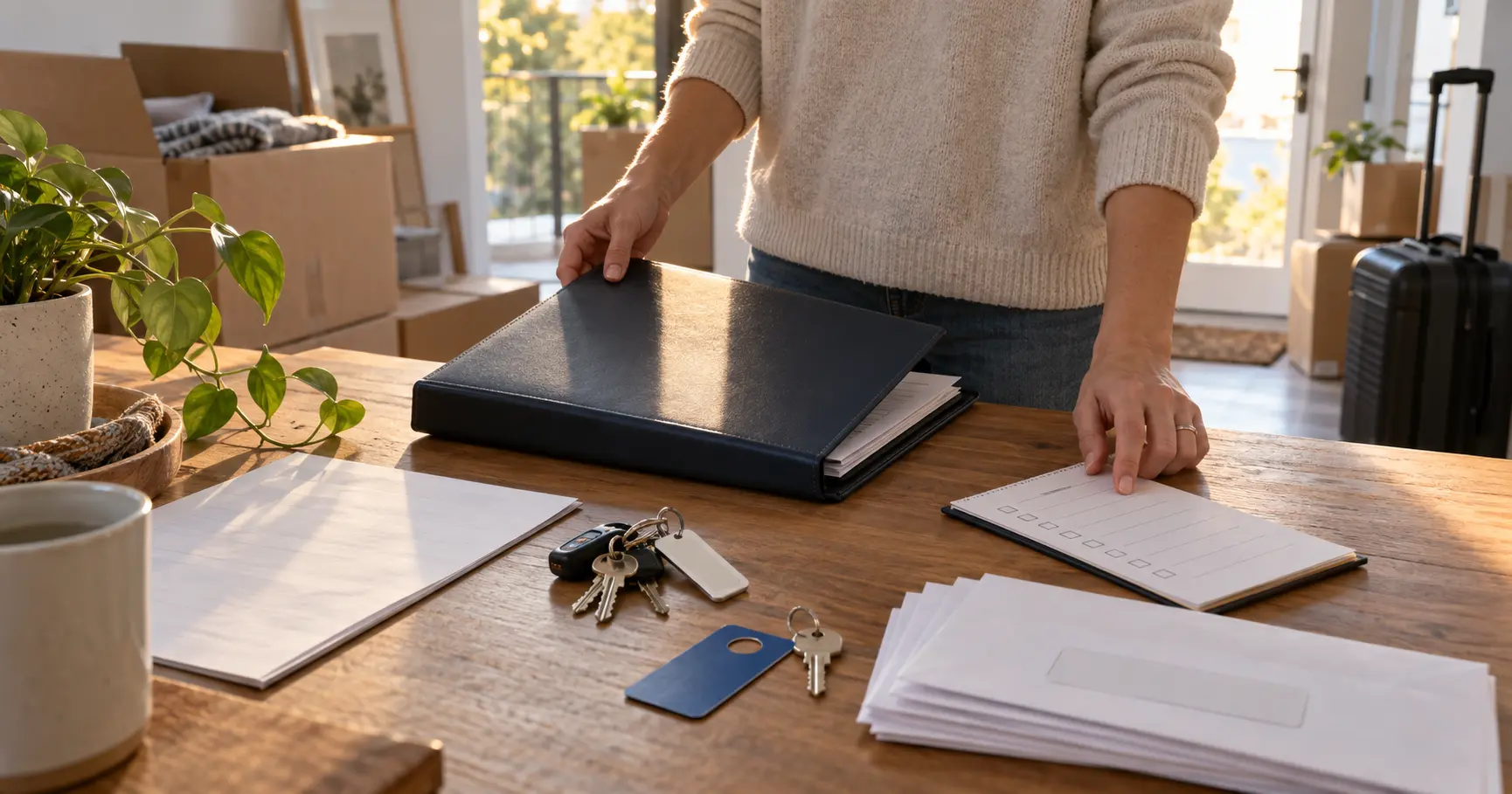
Moving out of an HOA home is not finished when the moving truck leaves. Your goal is to hand over clean title and a clean association file: the balance used at closing is paid, open violations are resolved or allocated, access devices are handled, architectural records are available to the buyer, and your autopay stops only after the ownership transfer is certain.
Two weeks before closing: reconcile the owner account
Download or request an itemized ledger and compare it with the latest estoppel, resale certificate or closing payoff. Look for regular dues, special-assessment installments, fines, late charges, move deposits, amenity charges and credits. If you recently paid something, send proof before the final closing figures are prepared. A payment that is in your bank history but not yet on the association ledger can become a duplicate collection or closing credit problem.
Close violations with evidence, not a phone promise
If you repaired a fence, repainted, removed an item or otherwise cured a violation, ask for written closure. If a condition cannot be cured before closing, disclose it through the transaction process and let the buyer-seller contract decide how it will be handled. Do not tell the buyer that a fine 'goes away at closing' unless the association has actually confirmed that result and applicable law supports it.
Build a handoff folder for property-specific approvals
- Architectural approvals and final drawings for additions, fences, roofs, solar panels, windows or major landscaping.
- Permits or final inspections that relate to association-approved exterior work.
- Assigned parking/storage information and any recorded or governing-document basis for exclusive use.
- Current gate, mailbox, amenity and move procedures that a new owner needs.
- Warranties for owner-maintained components that may otherwise be mistaken for association responsibility.
- Any current special-assessment notice or project communication already supplied through the sale process.
This is not about creating a private warranty for the buyer. It is about avoiding a future situation where the association sees an exterior feature but the new owner cannot prove it was approved years earlier.
Return devices only when you know which ones transfer with the home
Some associations deactivate owner credentials and issue new credentials after transfer; others expect gate remotes, parking decals, keys or fobs to remain with the unit or be returned to management. Ask for the written move-out/transfer procedure. Record serial numbers if practical and obtain a receipt for any refundable device deposit. Never leave a master or staff-only credential with a buyer merely because it opens a gate.
| Item | Before closing | After confirmed transfer |
|---|---|---|
| Dues autopay | Leave active unless closing instructions say otherwise | Cancel future drafts and save cancellation confirmation |
| Owner portal | Download ledger, notices and approvals | Update contact/disable access as association directs |
| Fobs/remotes | Inventory and follow transfer/return policy | Keep receipts for returned devices/deposits |
| Insurance | Coordinate effective dates with insurer and closing | Retain proof of prior coverage/claim records |
| Mailing address | Provide forwarding address where appropriate | Watch for final account/refund correspondence |
Do not cancel autopay the day you accept an offer
Closings move. A buyer can have a lending delay or a transaction can fail. If you stop regular assessments too early, your account can become delinquent while you still own the property. Coordinate the final debit with the closing date and association billing cycle. After title transfer is confirmed, cancel the recurring instruction and retain the confirmation. If an automatic debit posts after closing, use the settlement statement and transfer date to request the correct adjustment.
What an estoppel does—and does not—solve
An estoppel certificate can give the closing team an association statement about amounts and specified account facts as of the statutory/document date. In Florida, §720.30851 governs HOA estoppel certificates and current timing requirements. But a seller should still keep proof of payments and the final settlement statement. A later billing-system mismatch is easier to correct when you can show exactly what the closing agent paid and what the association certified.
If a refund or credit remains
Ask whether the balance belongs to you, transfers with the account, or was credited on the closing statement. Move deposits and prepaid items can be treated differently. Do not ask the buyer privately to send money until the settlement agent has confirmed the closing allocation; otherwise both sides may unknowingly pay or receive the same item twice.
Your five-minute post-closing audit
- Confirm the deed/title transfer through the closing professional.
- Compare the final settlement HOA charges with the final certificate/payoff.
- Cancel owner autopay and save proof after transfer is confirmed.
- Send the association the forwarding/contact information required for any refund or final correspondence.
- Keep the association closing packet, payoff, ledger, violation closure and device/deposit receipts with your tax/closing records.
A good move-out leaves no mystery for the association, buyer or seller. Close the account like a small project: reconcile money, close enforcement items, document physical-access handoff, then preserve the paper trail after the keys change hands.
Do not destroy the association file after you hand over the keys
Keep the final closing statement, estoppel or resale certificate, proof of the last assessment payment, any refund correspondence, approval records you transferred to the buyer, and confirmation of account closure. If management later sends an automatic statement or the buyer disputes responsibility for a pre-closing charge, those records show the cutoff point without requiring you to recover documents from a portal you can no longer access.
If the association owes you money—a deposit, overpayment, prepaid assessment, or account credit—write down who is processing it and where the refund will be mailed. Closing does not always trigger an automatic refund. Follow up until the check or electronic credit clears, and preserve the explanation if the association instead transfers the credit to the buyer through settlement.
Questions homeowners ask
When should I stop HOA autopay when selling?
Wait until the ownership transfer and final payment allocation are sufficiently confirmed under your closing process. Stopping too early can create a delinquency if closing is delayed.
Do I need to give the buyer my old HOA approvals?
It is useful to provide property-specific architectural approvals and related records through the transaction file so the new owner can document that existing exterior work was authorized.
What if the HOA charges me after closing?
Compare the charge date and basis with the closing statement, transfer date, final ledger and certificate. Send the documentation to the association and closing professional and request a written correction or explanation.
Should I keep my HOA portal after selling?
Download your useful records before closing. After transfer, follow the association’s security process for ending former-owner access; do not retain access to a new owner’s account.